top of page

General Discussions

Public·178 members

Napoleon and His “Camel-Sick Corps”

Napoleon and His “Camel-Sick Corps”

A curious footnote to the history of war and “seasickness” is connected with Napoleon. While the military significance was not considered important, the appearance of seasickness in the desert was unusual. In his first military campaign against Egypt (1798–1799), General Napoleon conceived the idea of creating a camel corps. He supposedly had become aware of the camel’s suitability for transportation quite early. Although riding a camel did cause him some nausea, it was not so considerable as to prevent him from using one himself. Indeed his special camel was embalmed when it died of natural causes and is said to still be on exhibit in the African museum in Paris. In January 1799, Napoleon instituted the dromedary regiment which saw action after an attack of the Bedouins. Camels had several advantages over horses, namely, they did not have to drink so often and were adapted to the harsh conditions of the desert. They could easily travel for hours and outrun as well as outlast enemies on horses. One major drawback, however, was that soldiers who were susceptible to motion sickness could become “seasick” on this “ship of the desert” and not be able to engage in battle. The corps saw action for a period of three years (1798–1801). It was disbanded after France withdrew from Egypt following losses to the British.
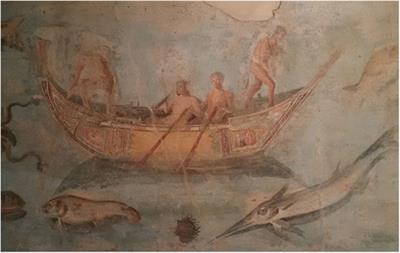


A Historical View of Motion Sickness—A Plague at Sea and on Land, Also with Military Impact
www.frontiersin.org
A Historical View of Motion Sickness—A Plague at Sea and on Land, Also with Military Impact
Seasickness and its triggers, symptoms, and preventive measures were well known in antiquity. This chapter is based on an analysis of descriptions of motion sickness, in particular seasickness, in ancient Greek, Roman, and Chinese literature. A systematic search was made from the Greek period beginning with Homer in 800 BC to the late Roman period and ending with Aetios Amidenos in 600 AD, as well as in the Chinese medical classics dating from around 300 AD. Major aspects are the following: body movements caused by waves were identified in all cultures as the critical stimuli. The ancient Greeks and Romans knew that other illnesses and the mental state could precipitate seasickness and that experienced sailors were highly resistant to it (habituation). The Chinese observed that children were particularly susceptible to motion sickness; they first described the type of motion sickness induced by traveling in carts (cart-sickness) or being transported on a litter or in a sedan chair (litter-sickness). The western classics recommended therapeutic measures like fasting or specific diets, pleasant fragrancies, medicinal plants like white hellebore (containing various alkaloids), or a mixture of wine and wormwood. The East knew more unusual measures, such as drinking the urine of young boys, swallowing white sand-syrup, collecting water drops from a bamboo stick, or hiding earth from the kitchen hearth under the hair. The Greek view of the pathophysiology of seasickness was base...

216 Views
bottom of page